
Back
Superior Cluneal Nerve Entrapment: Low Back & Buttock Pain
Superior cluneal nerve entrapment (SCN-E) is an under-recognized cause of low back and upper-buttock pain. The superior cluneal nerves are purely sensory — they supply skin over the iliac crest and gluteal region and can get pinched where they pierce the thoracolumbar fascia at the posterior iliac crest. Pain can look like a disc problem or SI joint fuss, which is why the crest trigger point and a diagnostic nerve block matter.
Where is superior cluneal nerve pain located?
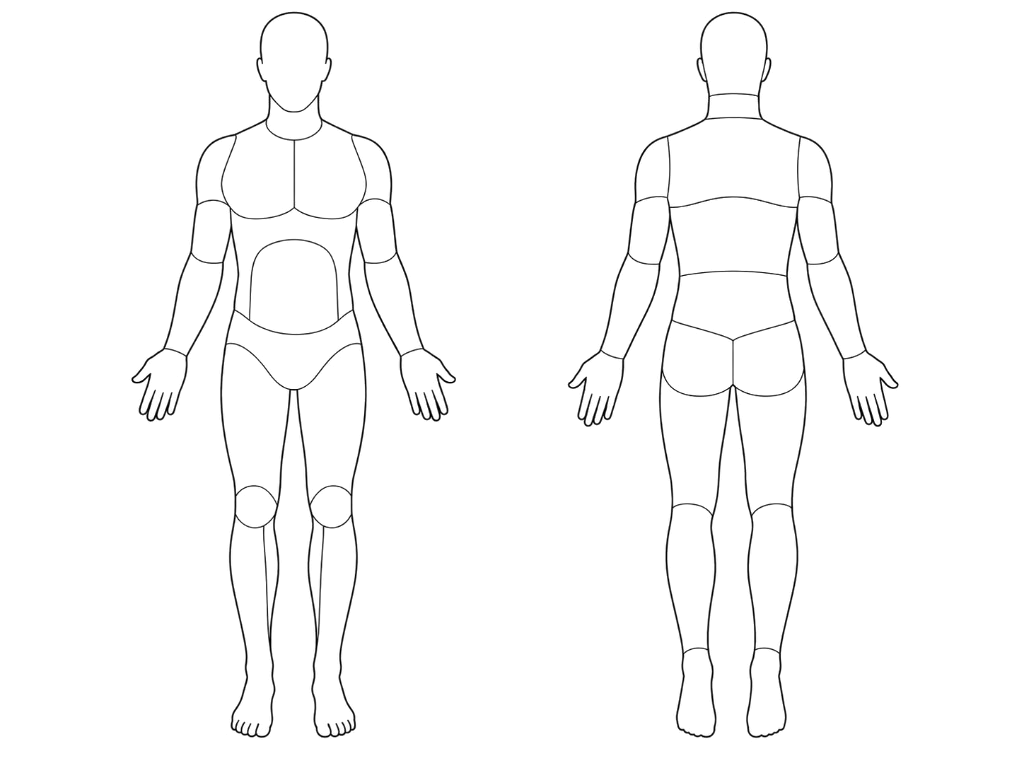
Classic SCN-E pain sits along the posterior iliac crest — the bony rim you feel at the top of the pelvis — and spills into the upper buttock. It is often lateral (off to one side) rather than dead-center over the spine. Series of patients with low back pain report SCN-E in roughly the 1.6–14% range, depending on how strictly it is defined and who is examining.
What does it feel like?
Burning, aching, or sharp flares over the crest and upper buttock. Lumbar motion often aggravates it. Importantly, published series note that many people also report leg symptoms (reported in roughly half to most SCN-E cohorts) — enough to mimic radiculopathy even when the entrapped nerve itself is cutaneous and does not control foot strength.
What causes superior cluneal nerve entrapment
The superior cluneal nerves (typically from dorsal rami around L1–L3) travel through an osteofibrous tunnel as they cross the iliac crest / pierce the thoracolumbar fascia. Tight tissue, scarring, or mechanical constriction at that tunnel can produce cluneal neuralgia. Middle and inferior cluneal nerves can cause related but anatomically different pain patterns.
- Entrapment at the osteofibrous tunnel over the posterior iliac crest (most discussed SCN site)
- Prior lumbar or iliac-crest surgery / bone-graft harvest scarring in some patients
- Age-related and mechanical factors; vertebral fracture history appears in risk discussions
- Repetitive lumbar motion or sustained pressure over the crest (belts, hard seats, gear straps)
- Idiopathic cases — no dramatic injury, but a clear crest trigger on exam
SCN-E vs sciatica / disc radiculopathy
True radiculopathy more often includes objective weakness, reflex changes, or a clear dermatomal pattern matching an MRI lesion. SCN-E pain is driven from a crest trigger; pressing that spot reproduces the complaint, and a crest-level block can quiet it. Overlap and mislabeling are common — which is why “failed” spine pathways sometimes still have an untreated peripheral nerve.
SCN-E vs sacroiliac joint pain
SI joint pain and SCN-E can coexist and both live near the back of the pelvis. SI provocation tests and SI-targeted procedures do not automatically treat an entrapped cluneal nerve. Case reports describe ongoing crest/buttock burning after SI fusion that then responded to a superior cluneal block — a reminder to examine the crest itself.
Why facet blocks and some spine surgeries miss it
Facet-mediated pain and SCN-E are different generators. If the pain generator is a cutaneous nerve at the crest, interventions aimed only at the facet joint or disc may leave the complaint untouched — or leave the patient convinced “nothing works.”
Symptoms that may occur with SCN entrapment
- Low back pain that sits over the iliac crest and upper buttock — often one-sided
- Burning, tingling, or a Tinel-like zap when the crest “trigger” is pressed
- Pain that flares with lumbar bending, twisting, standing up, or walking
- Symptoms that can shoot into the buttock or leg and mimic sciatica — without a clear disc story
- Lying on the back or pressing a hard chair edge into the crest can intensify the ache
- Months of “mystery LBP” that did not respond to facet blocks or even spine surgery aimed elsewhere
When should you seek urgent medical help?
SCN-E is usually a chronic neuropathic / entrapment problem — still get urgent care for classic back red flags:
- New bowel or bladder control loss, or numbness in the saddle / genital area
- Progressive leg weakness, foot drop, or inability to walk
- Fever, unexplained weight loss, night pain that never eases, or cancer history
- Pain after major trauma with inability to bear weight
- Sudden severe pain with a swollen, hot joint or feeling systemically ill
- Chest pain or calf swelling with leg symptoms — do not self-sort as “just nerves”
How superior cluneal nerve entrapment is diagnosed
Imaging rarely “shows” the entrapment. Diagnosis is clinical, then confirmed when a carefully placed local anesthetic block at the suspected site substantially relieves symptoms. Criteria outlined by Isu and colleagues (widely cited in SCN-E literature) include:
- Low back pain involving the iliac crest and gluteal region
- Pain worsened by lumbar spine movement
- Tenderness over the posterior iliac crest at the entrapment site
- Reproduction of pain and/or numbness when that site is compressed (Tinel-like)
- Symptom relief after a diagnostic superior cluneal nerve block
MRI or CT may still be used to exclude other structural disease — they are not the primary way to confirm SCN-E. Ultrasound guidance is increasingly used for blocks in specialist settings.
Treatment options
Care is usually stepwise: load and therapy first when appropriate, then injections, then advanced nerve procedures or surgical decompression for refractory cases.
- Activity modification — reduce sustained pressure on the crest; adjust belts/gear/seating
- Physical therapy focused on lumbar–pelvic mechanics without endlessly poking the inflamed tunnel
- Diagnostic / therapeutic nerve blocks — some series report meaningful relief after 1–3 SCN blocks (response rates vary widely by study)
- Ultrasound-guided hydrodissection or other interventional techniques in pain-medicine practice
- Radiofrequency / thermal techniques or topical neuropathic strategies in selected refractory cases
- Surgical decompression / neurolysis of the entrapped branches when blocks confirm the target but relief will not hold
Can I manage this at home?
Partially— confirmation needs a clinician
You can reduce crest pressure and keep moving, but the diagnostic gold standard in published criteria is a targeted block. Self-labeling every buttock ache as SCN-E skips important differentials (disc, SI, fracture, infection).
What helps at home
- Pad hard chair edges; loosen waistbands that dig into the iliac crest
- Short walks over marathon sitting; change position before the crest “cooks”
- Heat for muscle guarding around the area if it calms you — avoid aggressive deep digging on a fresh Tinel spot
- Track triggers: bending, twisting, lying supine, walking distance — useful for the visit
Avoid
- Assuming another round of the same failed facet/disc plan will suddenly fix a crest nerve
- Aggressive “sciatic nerve flossing” that recreates sharp crest zaps without a diagnosis
- Ignoring saddle numbness, progressive weakness, or trauma red flags
- DIY injections or unregulated nerve “release” gadgets
The bigger picture
Low back pain is a crowded neighborhood. Disc, facet, SI joint, hip, and muscle stories dominate the conversation — while a small sensory nerve crossing the iliac crest can quietly generate years of burning pain and even leg symptoms that look like sciatica.
The practical lesson from SCN-E research is humble exam technique: find the crest trigger, reproduce the pain, and ask whether a precise block changes the story. When it does, treatment can stay peripheral — blocks, neurolysis, decompression — instead of escalating the wrong spinal target.
This page summarizes established clinical teaching for general education. It is not a personal diagnosis. New, severe, or neurological red-flag symptoms need prompt medical evaluation.
Frequently asked questions
Can superior cluneal nerve entrapment cause leg pain like sciatica?
Yes — published SCN-E series report leg symptoms in a large fraction of patients, which is why it mimics radiculopathy. The entrapped nerves are still cutaneous sensory branches; the referral pattern can fool patients and clinicians until the crest trigger is examined.
Will an MRI show superior cluneal nerve entrapment?
Usually not in a way that “proves” SCN-E. Imaging is mainly to exclude other structural problems. Diagnosis leans on the crest trigger, symptom reproduction, and response to a diagnostic block.
How is this different from middle cluneal nerve entrapment?
Different anatomy and tunnel. Middle cluneal nerves relate more to the sacral / long posterior sacroiliac ligament region; superior cluneal nerves are the iliac crest / thoracolumbar fascia story. Both can cause buttock-region neuralgia; the exam maps which tunnel to block.
Do nerve blocks always fix it permanently?
No. Some people get lasting relief after one or a few blocks; others get temporary diagnostic relief and then need repeat injections, advanced interventional care, or surgical decompression. Response rates vary across published series — so “block failed once” is not the whole story.
I had spine surgery and still have crest/buttock burning — could it be SCN-E?
Possibly. Failed-back and persistent LBP differentials include peripheral cluneal entrapment. It does not mean the prior surgery was “wrong” — it means a second pain generator may have been sitting on the crest the whole time. A clinician familiar with SCN-E exam and blocks can sort that.
Where exactly should I point when I see a doctor?
Point to the top rim of the pelvis (iliac crest) on the painful side and the upper buttock skin below it — not only the center of the spine. Mention if pressing that rim recreates tingling or your usual pain; that detail steers the exam.
Selected sources
- StatPearls. Cluneal Neuralgia — NCBI Bookshelf NBK587348
- Isu T, et al. Superior and Middle Cluneal Nerve Entrapment as a Cause of Low Back Pain. PMC5944640
- Comprehensive review of cluneal neuralgia as a cause of lower back pain (Orthop Rev 2022) — PMC9235435
Informational only — not a diagnosis or treatment plan. Seek professional care for personal medical decisions. New neurological deficits or trauma need prompt evaluation before chronic entrapment syndromes are considered.