
Abdomen
ACNES: Anterior Cutaneous Nerve Entrapment Syndrome
ACNES is a common cause of chronic abdominal wall pain — not pain from the stomach, gallbladder, or bowel. Small sensory nerve branches (usually from spinal levels T7–T12) get pinched as they pierce the rectus abdominis near its lateral border. The result is a fixed, fingertip-sized hotspot that is easy to miss if every workup is aimed at the organs inside.
Where is ACNES pain located?
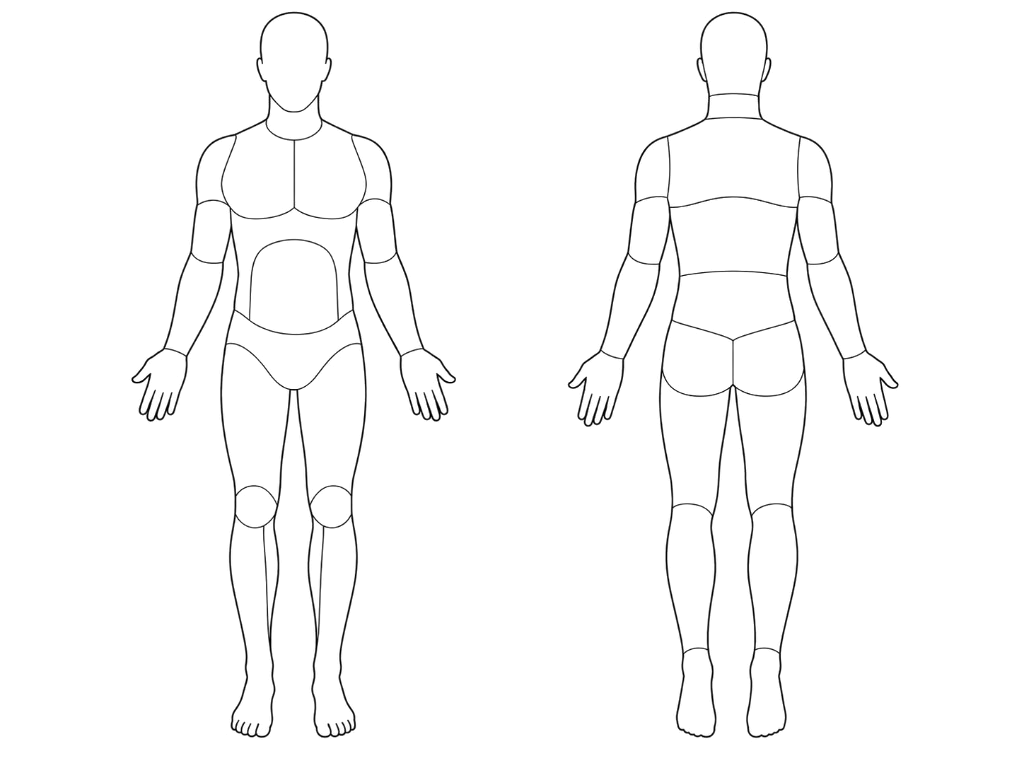
Almost always on the front abdominal wall, along the lateral edge of the “six-pack” muscle (rectus abdominis), medial to the linea semilunaris. One side is typical; the right lower quadrant is a frequent address — which is why people get worked up for appendicitis or ovarian pain first. The tender zone is tiny: clinicians describe a trigger point smaller than about 2 cm² that you can often cover with a fingertip.
What does ACNES feel like?
Reviews describe a mix of dull ache and sharp, stabbing flares at one fixed site. Twisting, sitting up from lying down, coughing, or pressing clothing against the spot can light it up. Unlike many visceral problems, nausea, vomiting, and major bowel changes are often absent — which frustrates everyone when CT scans keep coming back normal.
What causes ACNES
Anterior cutaneous nerve branches turn sharply (~90°) as they pass through a fibrous ring in the posterior rectus sheath, then turn again toward the skin. Entrapment can happen from pressure, swelling, scarring, or herniation of the fat pad that normally lets the nerve glide. Many people have no dramatic injury — the syndrome is simply under-recognized.
- Mechanical compression — tight clothing, belts, or sustained abdominal wall tension
- Increased intra-abdominal pressure or abdominal wall strain
- Scar tissue after surgery or localized abdominal wall trauma
- Pregnancy or hormone-related tissue edema (reported associations in clinical literature)
- Idiopathic cases — no clear trigger, but a classic exam still points to the wall
Abdominal wall pain vs organ (visceral) pain
Organ pain is often deeper, harder to pinpoint, and may come with fever, vomiting, jaundice, or bowel/bladder red flags. Wall pain is superficial, fingertip-localizable, and often intensifies when the abs are tensed. That distinction is the point of Carnett’s test (described in 1926 and still used in modern ACNES pathways).
Why ACNES is missed so often
In series of chronic abdominal wall pain, ACNES accounts for a substantial share — reported in roughly the 15–30% range depending on definitions and clinic setting. Patients may cycle through gastroenterology, gynecology, and imaging before someone presses the exact trigger point and asks them to lift their head.
Not the same as IBS or “just anxiety”
IBS centers on gut–brain symptom patterns with stool changes. ACNES is a peripheral nerve entrapment in the wall. Anxiety can amplify any pain, but a positive Carnett’s sign and a diagnostic lidocaine block are physical findings — not a personality diagnosis.
Symptoms that may occur with ACNES
- Sharp, burning, or dull pain fixed to a tiny spot on the front abdominal wall
- A “trigger point” you can often point to with one fingertip (usually under ~2 cm²)
- Pain that stays the same or worsens when you tense the abs (Carnett’s sign)
- Altered skin feeling over the spot — light touch, cold, or a skin pinch hurts more than nearby skin
- Pain that may radiate sideways along one dermatome, but bowel habits are often normal
- Months of “mystery belly pain” with normal labs, ultrasound, CT, or endoscopy
When should you seek urgent medical help?
ACNES is usually chronic and non-emergency — but new abdominal pain still needs triage for surgical and medical emergencies:
- Sudden severe pain, rigid abdomen, or pain with fainting
- Fever with progressive belly pain, or inability to keep fluids down
- Persistent vomiting, black/bloody stool, or vomiting blood
- Jaundice, severe pregnancy-related pain, or pain after major trauma
- Chest pain, shortness of breath, or other systemic red flags
- Progressive neurological deficits elsewhere — do not self-label everything as ACNES
How ACNES is diagnosed
There is no blood test or scan that “shows” ACNES. Diagnosis is clinical, after enough evaluation that urgent visceral disease is unlikely. Published diagnostic frameworks (including criteria used by van Assen and colleagues and summarized in pain-medicine reviews) cluster around the following:
- Localized abdominal wall pain with a small unilateral trigger point at the lateral rectus border
- Positive Carnett’s sign — tenderness stays the same or worsens when the patient tenses the abs while the spot is pressed
- Positive pinch test and/or altered light-touch or cold sensation over the hotspot
- Unremarkable labs and imaging for an alternative surgical/medical cause (when those tests were indicated)
- ≥50% pain relief after a carefully placed local anesthetic injection at the trigger point (diagnostic and often therapeutic)
Ultrasound guidance is increasingly used for injections in specialist settings. Do not inject yourself — placement and sterile technique matter.
Treatment options
Care is usually stepwise. Many people improve with trigger-point injections; a minority need advanced nerve procedures or surgery.
- Education + activity modification — avoid constant pressure on the trigger point; loosen belts that dig in
- Trigger-point injection with local anesthetic (± corticosteroid) — first-line in most pathways; may need a short series
- Adjunct oral neuropathic agents in selected cases (clinician-guided; evidence is more limited than for injections)
- Chemical neurolysis or pulsed radiofrequency for refractory pain in specialist hands
- Anterior neurectomy (surgical division of the entrapped cutaneous branches) when injections fail — centers report substantial long-term relief rates, with possible numbness over the spot
Can I manage ACNES at home?
Partially— diagnosis and injections need a clinician
You can reduce aggravators at home, but confirming ACNES and delivering the treatment that actually works for most people (a precise injection) is not a DIY project. Self-diagnosing after one Google search is how appendicitis and other emergencies get missed.
What helps at home
- Loosen waistbands; avoid pressing phone/edge of desk into the tender spot for hours
- Heat or gentle soft-tissue work around (not aggressively into) the hotspot if it calms you
- Keep a one-line pain map: exact location, what triggers it, what eases it — useful for the visit
- Stay generally active; total bed rest rarely fixes wall pain
Avoid
- Repeating endless GI tests without anyone examining the abdominal wall carefully
- Deep, painful “trigger point digging” that worsens nerve irritation
- Assuming every future belly twinge is ACNES forever
- Buying unregulated injection kits or attempting blocks at home
The bigger picture
ACNES sits in an awkward gap in medicine: common enough to matter, subtle enough that standard abdominal algorithms overlook it. The anatomy is tidy — a nerve making sharp turns through a fibrous ring — but the patient’s journey is often messy: normal scans, specialist referrals, and years of unexplained pain.
The hopeful part is also tidy. When the exam fits, a local anesthetic block can both confirm the diagnosis and start treatment. For people who do not respond, structured escalation to neuromodulation or neurectomy is supported by specialty-center experience (including pediatric and adult series).
This page summarizes established clinical teaching for general education. It is not a personal diagnosis. New or severe abdominal pain needs proper medical evaluation.
Frequently asked questions
What is Carnett’s sign, in plain language?
A clinician finds your most tender fingertip spot, keeps pressure there, and asks you to tense the abs (lift your head/shoulders or legs). If pain stays the same or gets worse, the wall is implicated (positive Carnett’s). If pain clearly eases as the wall hardens, a deeper visceral source is more likely — though no single test is perfect.
If my CT and endoscopy are normal, can the pain still be real?
Yes. Those tests look at organs and the gut lining. ACNES is a nerve problem in the muscle wall — often invisible on standard imaging. Normal tests are part of the ACNES story, not proof that nothing is wrong.
Does a lidocaine injection prove I have ACNES?
Strong, temporary relief (often described as at least ~50%) after a precise trigger injection is a major diagnostic criterion used in research and specialty clinics. Incomplete relief does not always rule it out — placement, mixed pain sources, and technique matter — so interpret results with the clinician who did the block.
Is ACNES the same as a hernia?
No. A hernia is a defect that lets tissue bulge; ACNES is entrapment of a cutaneous nerve branch. They can coexist or be confused on exam, which is why imaging is sometimes still useful — to exclude hernia or other structural problems — even when ACNES is suspected.
Will I need surgery?
Most pathways try injections first. Surgery (anterior neurectomy) is reserved for persistent, well-localized pain after appropriate non-surgical care. Specialty centers report high rates of meaningful relief; possible numbness over the treated skin patch is a known trade-off.
Can teenagers get ACNES?
Yes. Pediatric hospitals (for example Boston Children’s) actively diagnose and treat ACNES in adolescents with chronic localized wall pain. Age alone should not push clinicians toward endless visceral testing if the exam screams abdominal wall.
Selected sources
- Chrona E, et al. Anterior cutaneous nerve entrapment syndrome: management challenges. J Pain Res. 2017 — PMC5245914
- Boston Children’s Hospital. Anterior Cutaneous Nerve Entrapment Syndrome (ACNES) — patient education on exam findings and stepwise treatment.
- Clinical reviews on chronic abdominal wall pain and Carnett’s sign (including diagnostic frameworks citing van Assen et al. trigger-point / lidocaine criteria).
Informational only — not a diagnosis or treatment plan. Seek professional care for personal medical decisions. New or severe abdominal pain needs prompt evaluation for surgical and medical emergencies before chronic wall syndromes are considered.