Chest
Tietze Syndrome: Swollen Chest Wall Pain Near the Sternum
Tietze syndrome is a rare inflammatory condition at the junctions where upper rib cartilage meets the breastbone — with a twist that costochondritis usually lacks: you can see or feel a swelling. The pain can still mimic heart trouble, so new chest pain needs proper evaluation before anyone hangs a Tietze label on it.
Where is Tietze syndrome pain located?
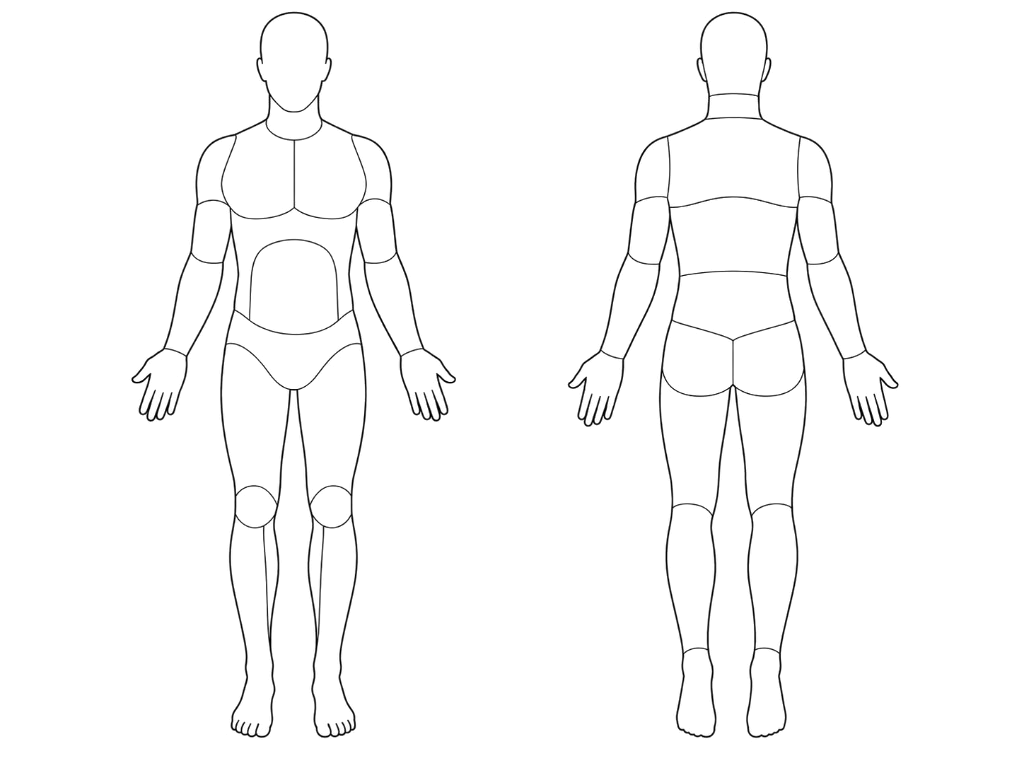
Almost always the upper chest wall — typically the 2nd or 3rd costochondral junction, a few centimeters left or right of the sternum. One side is usual; bilateral cases exist but are less common. The swollen knot sits right on the cartilage bridge between rib and breastbone, which is why the skeleton diagram above is the right map.
What does Tietze syndrome feel like?
A sharp or aching hotspot that spikes when you breathe deep, cough, or reach across your body — plus a firm, tender lump you can find with your fingertips. The swelling is what separates the textbook Tietze picture from plain costochondritis. Intensity ranges from annoying to sleep-stealing; fear often outruns the pathology because it lives on the chest.
What causes Tietze syndrome
The exact trigger is often unclear. Clinicians link many flares to mechanical stress or irritation of the costal cartilage — the same neighborhood as costochondritis, just with more local tissue reaction that shows as swelling.
- Repetitive strain — heavy lifting, rowing, overhead work, contact sports
- Prolonged coughing that shakes the upper chest wall
- Minor trauma to the sternum / rib junctions
- Viral illness around the time symptoms start (association, not always proven cause)
- Sometimes no clear trigger — it simply appears
Tietze syndrome vs costochondritis
Both are chest-wall cartilage problems. Costochondritis: pain and tenderness, usually without obvious swelling, and it can involve several junctions. Tietze: typically one or two upper junctions with visible or palpable swelling. In everyday practice the lines blur — what matters first is ruling out cardiac and lung emergencies, then treating the chest wall.
Why the swelling matters (and what it is not)
A new chest-wall lump deserves a clinician’s eyes. Most Tietze swellings are inflammatory, not cancer — but self-diagnosis from a photo is not a plan. Redness, fever, or rapid growth pushes urgency higher.
Heart attack mimicry
Like other chest-wall pains, Tietze can feel scary enough to land people in the ER — and that is often the right call for a first episode. Pressure, sweating, jaw/arm radiation, or breathlessness still belong in the emergency pathway, even if you later learn it was cartilage.
Symptoms that may occur with Tietze syndrome
- Localized pain at one or two upper rib–sternum junctions (often the 2nd or 3rd)
- A visible or feelable swelling / bulge over that junction — the hallmark vs costochondritis
- Tenderness that recreates the pain when you press the swollen spot
- Pain that flares with deep breaths, coughing, sneezing, or twisting
- Warmth or mild redness over the swollen area in some people
- Anxiety that any chest lump + pain equals something cardiac — which is why evaluation matters
When should you seek urgent medical help?
Treat new chest pain as urgent until cleared — especially if:
- Pressure, squeezing, or crushing pain; pain with exertion
- Shortness of breath, sweating, nausea, dizziness, or fainting
- Pain radiating to jaw, neck, or either arm
- Rapidly enlarging swelling, marked redness, fever, or feeling systemically ill
- Chest pain after major trauma
- A new lump with unexplained weight loss or night sweats — get checked, don’t wait it out
How Tietze syndrome is diagnosed
There is no single lab that “proves” Tietze. Diagnosis is clinical: localized swelling and tenderness at a costochondral junction — after enough workup that heart and lung emergencies are unlikely.
- History and exam focused on the swollen, tender junction
- ECG / blood tests / imaging when cardiac or pulmonary disease must be excluded
- Ultrasound or other imaging sometimes used to characterize the swelling or exclude other masses
- Further workup if the lump behaves atypically or does not improve
Treatment options
- Relative rest from movements that poke the swollen junction
- Anti-inflammatory pain relief when safe for you (ask a clinician / pharmacist)
- Heat or ice for comfort
- Gradual return to lifting and twisting once tenderness settles
- Physical therapy if pain or guarding lingers
- Local corticosteroid injection in stubborn cases under specialist care
Can I manage Tietze syndrome at home?
Often yes— after serious causes are ruled out
Once a clinician is comfortable calling it Tietze (or chest-wall inflammation with swelling), home care mirrors other costochondral flares: calm the irritation, protect the junction, rebuild capacity. First-time chest pain plus a lump is not a DIY diagnosis weekend.
What helps at home
- Pause heavy presses, one-arm loaded reaches, and violent twisting for a bit
- Use clinician-approved anti-inflammatories or acetaminophen as labeled
- Warm pack on the swollen junction; ice after activity if that feels better
- Sleep so you are not crushing the tender side all night
- Return to exercise only when pressing the spot no longer lights up sharp pain
Avoid
- Training through sharp junction pain “because the swelling looks small”
- Assuming every chest lump is Tietze forever without a clinical exam
- Skipping ER care when cardiac red flags are present
- Weeks of high-dose NSAIDs without medical advice
The bigger picture
Tietze syndrome is uncommon enough that many people have never heard the name — then they find a tender bump next to the sternum and fall down a rabbit hole of worst-case searches. The anatomy is simple: inflamed costal cartilage can swell enough to see.
Pain often settles over weeks to months; the swelling can lag behind and take longer to flatten. Recurrence happens, especially if the same mechanical load returns too fast. Pacing beats panic.
This page is general information, not a personal diagnosis. New chest pain or a new chest-wall lump needs prompt medical evaluation.
Frequently asked questions
If I can see a swelling, is it automatically Tietze and not a heart problem?
No. Swelling points toward the chest wall, but it does not cancel cardiac red flags. Pressure pain, exertion triggers, sweating, breathlessness, or arm/jaw radiation still warrant emergency evaluation. The lump and the heart question can coexist until a clinician sorts them.
How is Tietze syndrome different from costochondritis in real life?
The practical split is swelling: Tietze usually has a visible or palpable bulge at one or two upper junctions; costochondritis is typically tender without that obvious lump and may involve more sites. Labels overlap — treatment and red-flag thinking look similar either way.
Will the swelling go away, or am I stuck with a permanent bump?
Many people see the bulge shrink as inflammation settles, but it can take longer than the pain — sometimes weeks to months. A lump that grows, hardens oddly, or never changes deserves re-evaluation rather than endless waiting.
Can coughing alone cause Tietze syndrome?
Hard, prolonged coughing is a classic mechanical stress on the upper chest wall and is often listed among triggers. It is not the only cause, and not every cough leads to Tietze — but if a respiratory illness is followed by a tender swollen junction, mention that timeline to your clinician.
Does Tietze syndrome show up on an X-ray or MRI?
Plain X-rays often look normal because cartilage does not “light up” like bone. Imaging is mainly used to exclude other problems; ultrasound or MRI may help characterize soft-tissue swelling when the story is unclear. Diagnosis still leans heavily on the exam.
Is it safe to sleep on the swollen side?
If pressing that side against the mattress recreates sharp pain, switch positions for a while — comfort is a useful guide. There is no magic “wrong side forever” rule; avoid whatever keeps re-irritating the junction overnight.
Informational only — not a diagnosis or treatment plan. Seek professional care for personal medical decisions. New chest pain or a new chest-wall lump needs urgent evaluation until serious causes are excluded.